| | The management of environmental service organizations in both the public and private sector requires a good understanding of how to provide an effective service to meet public demand while maintaining ecological integrity. Areas such as planning, leadership, decision making, customer service and employee development will all be discussed and applied to case situations. This can be beneficial information if you work for a public parks organization in your future career or a private contractor. |
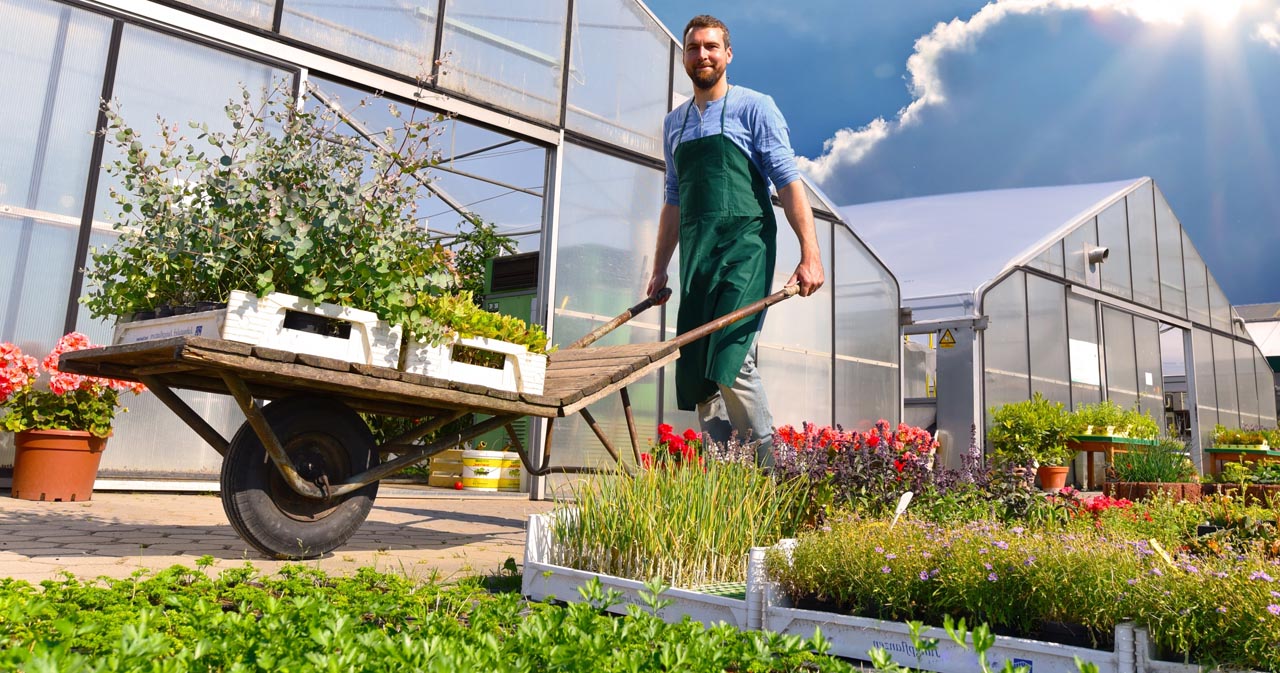
| | Greenhouse and Nurseries are a key sector of the Landscape industry as they grow, nurture and supply the plants required for garden centers, contractors, parks, and municipalities. Greenhouses also grow many of our local vegetables, houseplants and more recently Cannabis Crops. In this subject, students will gain an understanding of various greenhouse operations, structures and the crops that are commonly grown and cultivated. Students will explore the physiology and anatomy of plants, different propagation methods, plant nutrition requirements and pest and disease management. Students will assess the important factors needed to successfully grow crops in a greenhouse environment. The course will consider greenhouse trends such as edible crops and urban farming, vertical farming and interiorscaping (I.e. landscaping an interior space). |
| | The use of plants in a landscape and their maintenance is the primary objective of much of the work done with plants in the Landscape field. Those that reach this objective do so by understanding the linkages of the principles of landscape design with the growth characteristics and cultural requirements of plants. This subject will help you acquire knowledge of the cultural requirements of annuals, perennials and shrubs with particular reference to their identification, use and maintenance requirements. |
| | Prior to European settlement, Ontario was densely covered with mixed forest and scattered meadows. Driven primarily by agriculture, much of the southern part of the province has been cut over, reducing forests to small islands. Some wildlife species benefited from the change and others declined. Many pest species thrive. This subject explores the habitat and biology of organisms in the different types of terrestrial ecosystems of Ontario. Emphasis is on understanding what contributes to a healthy ecosystem and how we can restore biological diversity in degraded ones. |
| | This Work Term Preparation course is designed to empower students with the tools, skills, and strategies needed to navigate the modern job market and achieve long-term career success. Through self-assessment, career exploration, helping students to identify and leverage skills from their existing experiences, students will develop a deep understanding of their personal strengths, values, personality, interests and goals. The course covers essential topics such as crafting professional résumés and cover letters, mastering interview techniques, and building a strong personal brand, including an online presence. Students will learn how to research career pathways, evaluate job market trends, and create actionable career plans tailored to their aspirations. Emphasis is placed on professional communication, networking, workplace readiness, and adapting to diverse organizational cultures. Additionally, the course provides insights into negotiating job offers, managing career transitions, and professional growth. With a focus on lifelong learning and continuous improvement, this course equips students with the confidence and resources to pursue fulfilling careers while remaining adaptable in a dynamic and competitive workforce. Ideal for students preparing to enter the job market or those seeking to refine their career trajectory, this course fosters self-awareness, professional readiness, and strategic career planning. |